Five people. Two Coal Mines
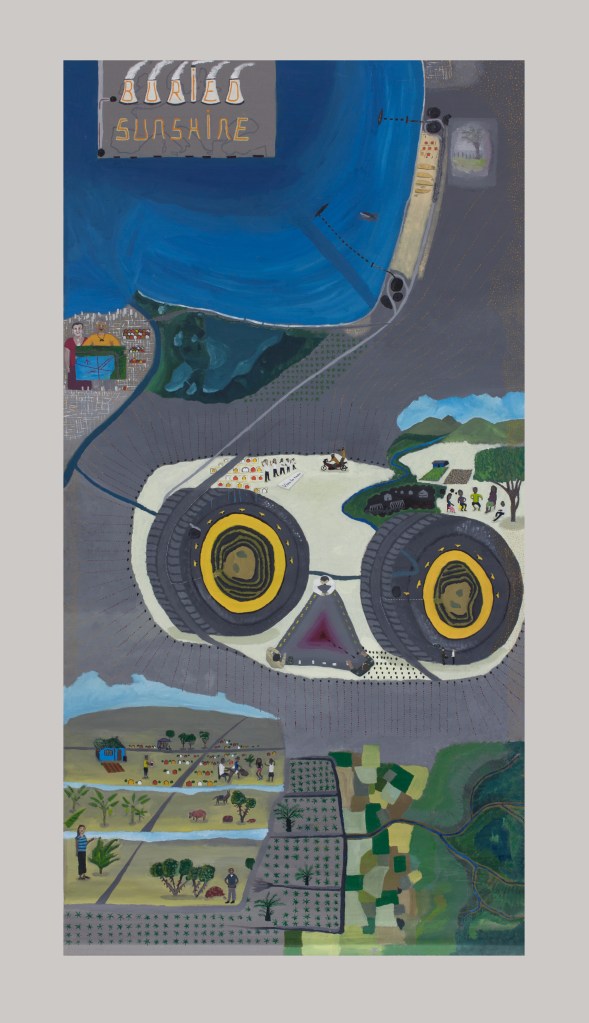
Two Maps. Five Stories
Buried Sunshine weaves together peoples stories to tell a dramatic tale of coal, courage and criminals. Nubia is optimistic and proud but will her reminiscing help her village to unite against the mine or is she clinging to a past that is gone? The children in Carmen’s village are sick from the dust and Carmen is seriously pissed off but there are risks if she says too much. Hernando narrowly escapes death and now he knows that god has made him invincible. El Canoso, criminal turned whistleblower, he is prepared to name some serious names if it gets him what he wants.
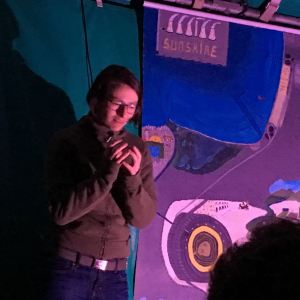
This theatre piece arose in response to questions around how we practice solidarity and share stories without inadvertently creating separation between us in the UK and them in far away places. I was interested in how art can creative different possible modes of relationality, that can contribute to decolonising solidarity.
The show was directed by Dave Lovatt and was performed at over 20 community events around the UK.
Audience comments:
“It blew me away”
“Incredible, you told not just this story but the thousands more like it”
“Working as an academic I’m constantly frustrated by the way we limit how we express ourselves: we use inaccessible, specialist language and we perform only in the half-life spaces of classrooms and conferences. As an activist, I am similarly often disappointed with our unimaginative presentations. That’s why it’s so refreshing to hear Scarlet perform the story of an oppressed Colombian village in a marquee at a protest camp, using poetic language and drama to bring our understandings to life, to change the rhythm of how we understand.”
“the thing that attracted me most was that the actor had met the people who’s words she performed. Through watching this play, I gained an insight into the lives of people who I would otherwise have no contact with, and whom I would struggle to understand.”
“I loved how Scarlet channelled her personal experience and passion for positive change and social justice by truly bringing her own first hand experiences to the stage. She shows us how it is worth standing up for the things we firmly believe in. That passion is a force. That there is hope. And that so called ordinary folk can challenge very powerful, wealthy organisations.”
“I loved that it is a one woman piece, both powerful, dramatic but also intimate. Found it very moving as it is and you are so gutsy and heartfelt. Also liked it as a structure – the shifting between commenting and between languages and the words of the people affected.”
 Scarlet Sumagr / Hall